the knife (an intro)
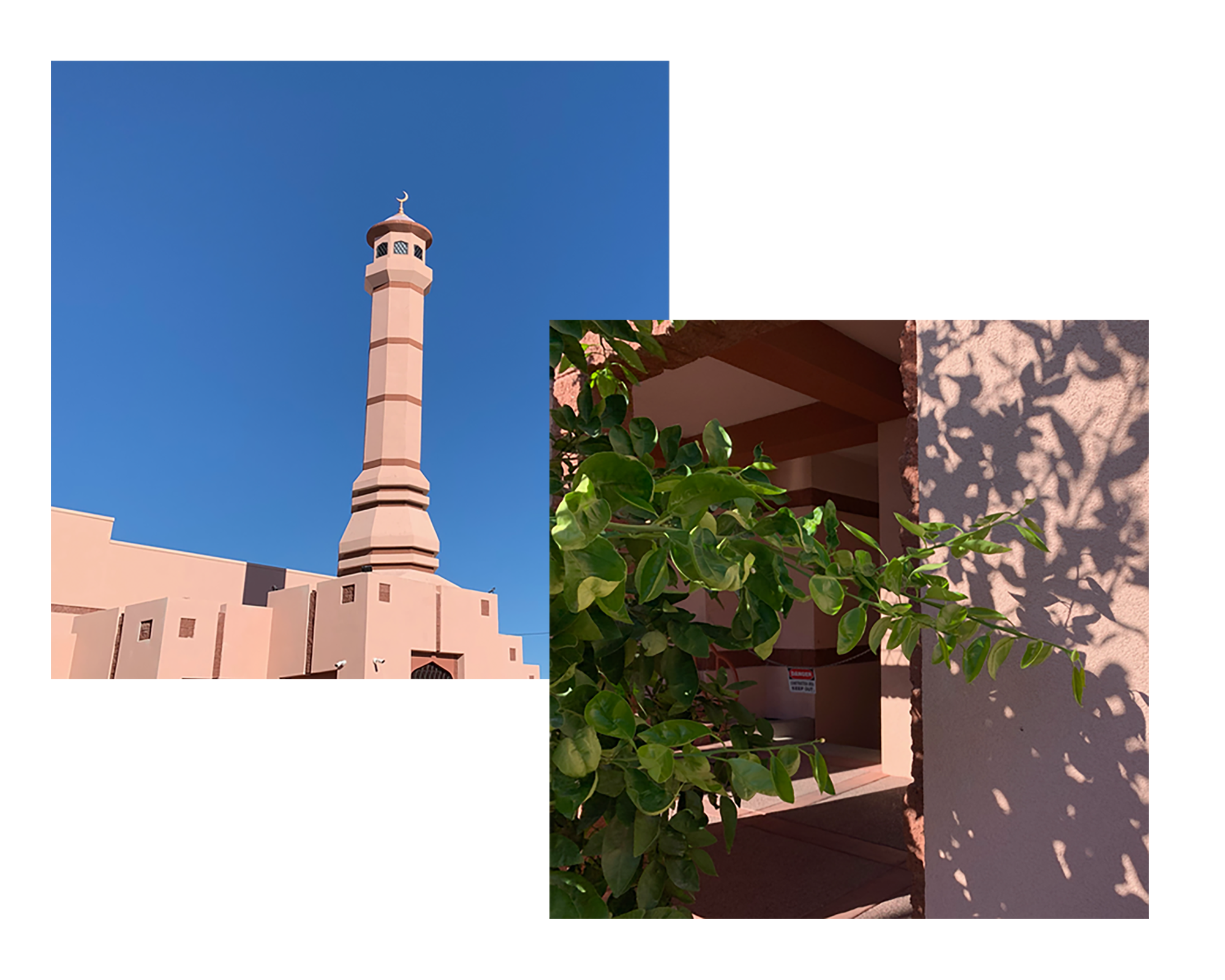
I was 19 when I went on my first journalism assignment, to a masjid in north Phoenix.
It was a few months leading up to the 2020 Census, and the masjid was mobilizing to increase census participation among its congregation. Masjid leaders wanted to ensure that their tight-knit community could be adequately represented in spite of limiting demographic categories.
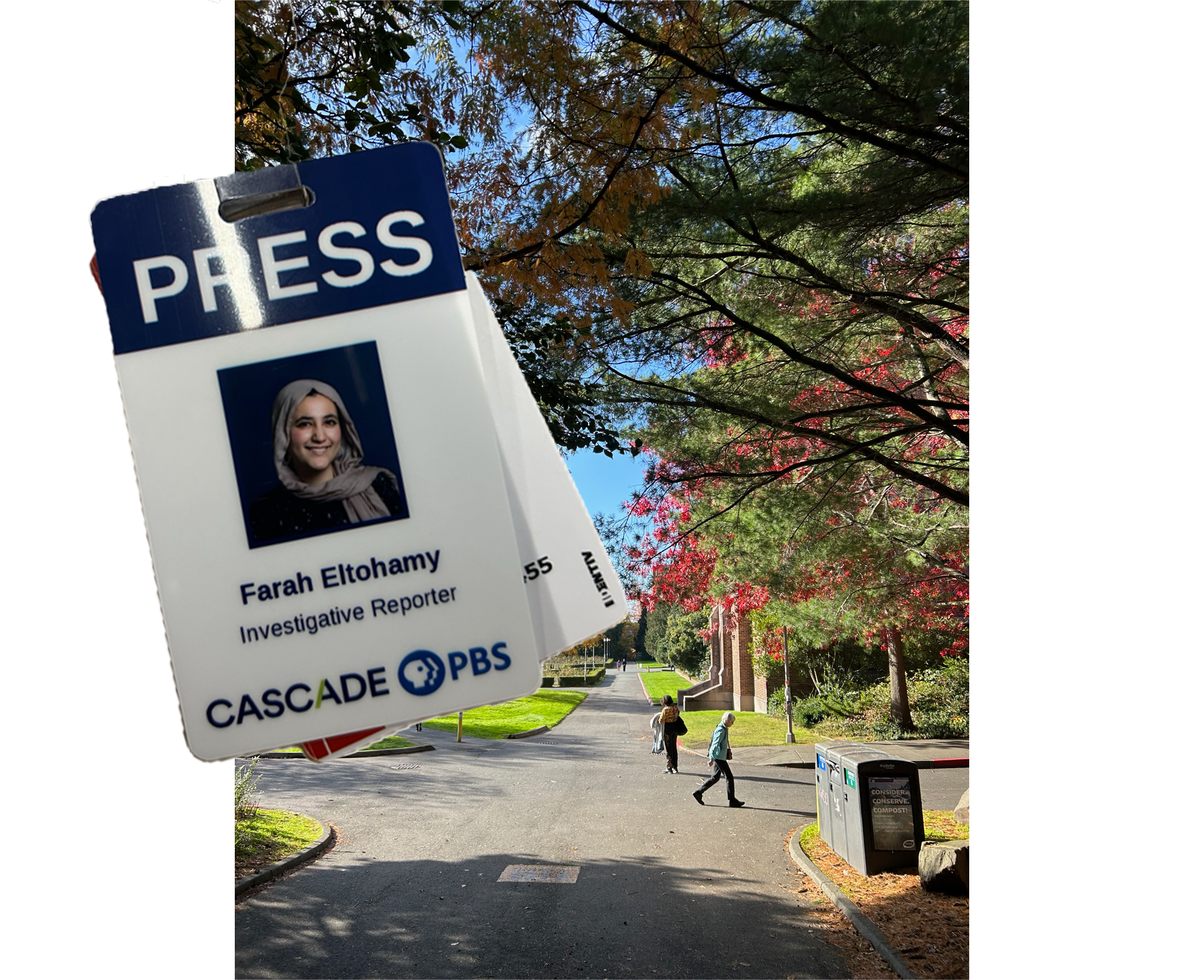
The assignment itself was pretty low-stakes. The masjid had mostly cleared out after jumuah, save for the handful of people who remained in the lulls between prayer times. I fiddled with the press badge my professor printed out for me, the other hand wrapped over my reporting notepad – grasping at anything to give me some sort of legitimacy.
I idled outside the masjid’s small courtyard before finally approaching its volunteers for a couple of shaky interviews. I thanked them before turning to the lobby, where the masjid president’s office was stationed at the entrance of the musalla.
We caught eyes and his face lifted into a warm grin. He wasn’t expecting the reporter who said she’d come in earlier to be Muslim, nonetheless clad in hijab.
At his desk, the masjid president, a Palestinian, and I, an Egyptian meshed into a seamless thread of English and Arabic. Towards the end, he told me major news outlets in the area only turned to him when they needed a token Muslim voice to condemn a random terrorist attack on the other side of the world.
They saw no value in investing in the stories of the mosque and its community – but in that moment, I did.

I spent the remainder of my college years making sense of the type of journalism I wanted to pursue. I was often thrown into political assignments that I cared little for: too much focus on those at the top, and not the people they were inflicting with their policies.
Any reprieve came in morsels. I found myself coming back to that masjid, searching for moments where I could connect with my sources on a strictly human level, sharing anecdotes over shared pain and identities.
I desperately wanted to believe in journalism’s potential as a means for justice, an avenue for those who have been failed by the systems meant to protect them. I wanted to believe I could report outside of my journalism school’s classist, white-normative rigidity.
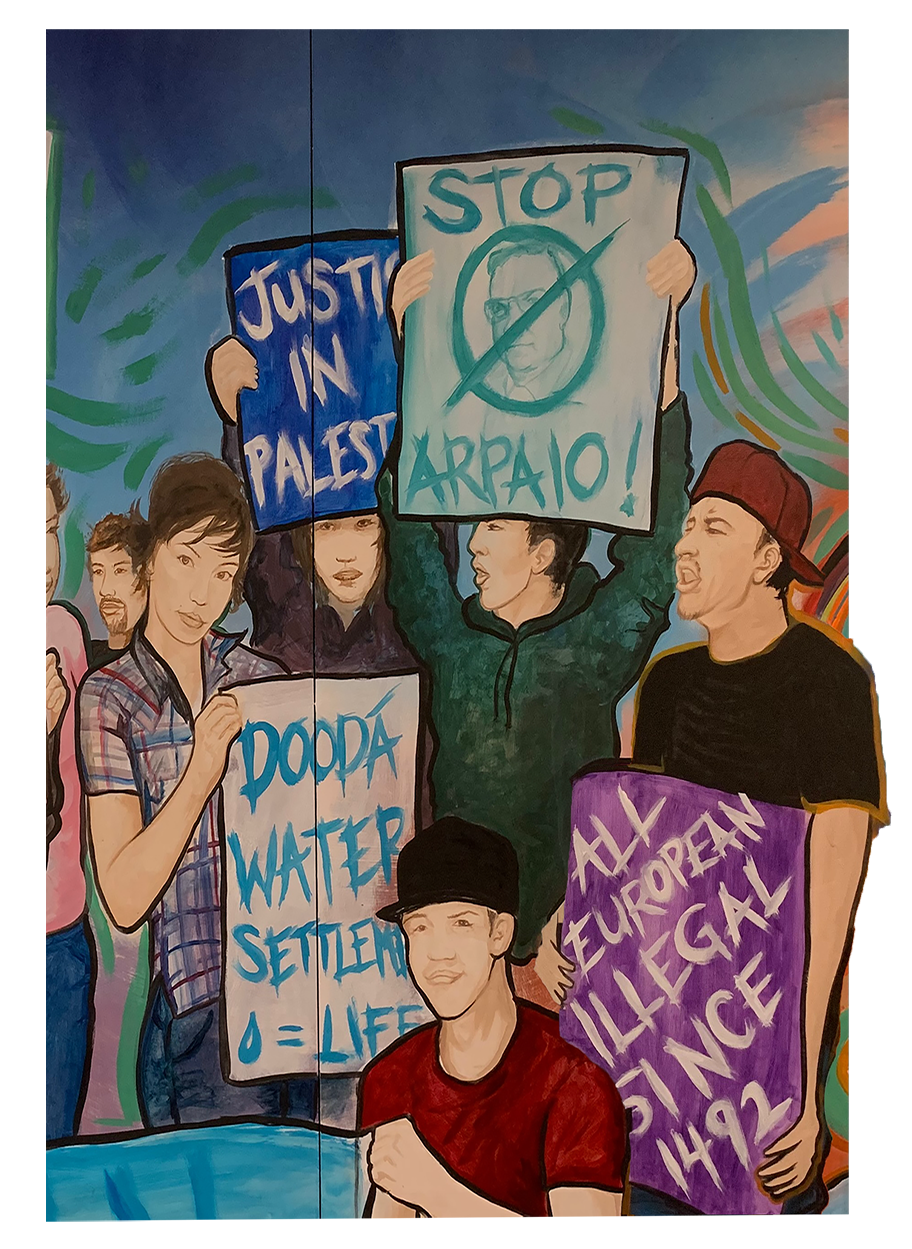
I saw it at 9 p.m. in the basement of the campus student union: a DACAmented student who told me she had no choice but to put her education on hold because her immigration status made her no longer eligible for financial aid. I saw it in the hospital worker, who — despite throwing her body on the line during the pandemic — was told by her employer she couldn’t financially afford to take time off for her second birth. I saw it in the midwife who didn’t want another Black or Indigenous woman’s death to be dismissed as just another number.

I’m now freshly 23 — graduated, but still living at my family home in suburban Phoenix. I blamed a dead-end job for tethering me to my lifeless hometown, for keeping me in the midst of a childhood community I’d long outgrown. My entire news team had also just been laid off in a massive, financial overhaul, and with no editors — all my stories were called off.
My drive for journalism dwindled, and I further regressed into self-pity.
Suddenly a text hit my phone.
“Do you have time in the next hour or so for a phone call?”
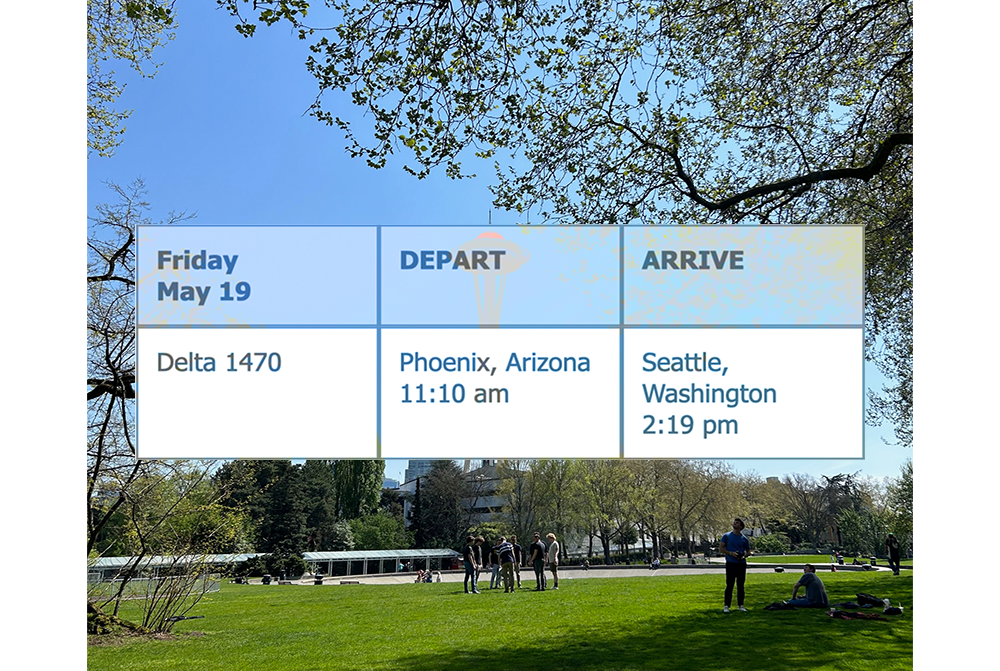
In a matter of days, I signed my first lease and lugged all my belongings northbound to Seattle. I’d been looking for a way out for nearly a year, and my soon-to-be editor had just called to offer me a position on his investigations team.
He took a chance on me despite my age and (what I thought, at least) a lack of experience needed to break into investigative journalism. He told me later that what he saw in me was someone with a deep empathy and strong sense of justice – someone who believed their work could soothe society’s overlooked while “scaring the hell out of PR flaks.”
The newsroom was called Crosscut at the time. It was a non-profit operating under Seattle’s local PBS affiliate (which unfortunately, despite being public media) somehow still lended itself to a lot of run-ins with crisp-collared, corporate bullshit.
It only took two weeks for top-level management to threaten the newsroom with an impromptu meeting. It felt as if every single newsroom leader in the country was following the same script: the words “rebrand” and “pivot to video” muddled my ears over and over again. In minutes, they axed the journalism team by half. I barely made it, and without a single story to my name.
I cried for a week straight over a returning fear: I’d never be worthy of a chance at this work, or even a livelihood, as long as I was at the mercy of the knife.
In the aftermath, I threw everything into this job. I stubbornly believed in the work as did my editor and the newsroom — even as an omnipresent lack of faith in management blanketed over our heads.

At the two month mark, I drove west to Aberdeen to report on a group of mobile home tenants who were organizing against their landlord. My editor and I had been following a thread of cartoonish evil: a local property management company was buying up mobile home parks in a frenzied shopping spree – jacking up the prices and pushing entire low-income, elderly (and in many cases, Spanish-speaking) communities to homelessness.
I was struggling with my copy. I had already submitted a couple-thousand-word behemoth of a draft to my editor a few days before, but it felt like I had just mashed my research and findings with interviews. The story was dulled of its color. At the risk of reporting too close to my publish date, my editor urged me to make the trip out.
It’ll clear your head, he said.
My late-morning shadow halted at the entrance of the park’s clubhouse, where its residents regularly gathered for their tenant organizing efforts. They had just been hit by an egregious 55% rent hike, and whatever lingering hope they had in their elected officials had waned.
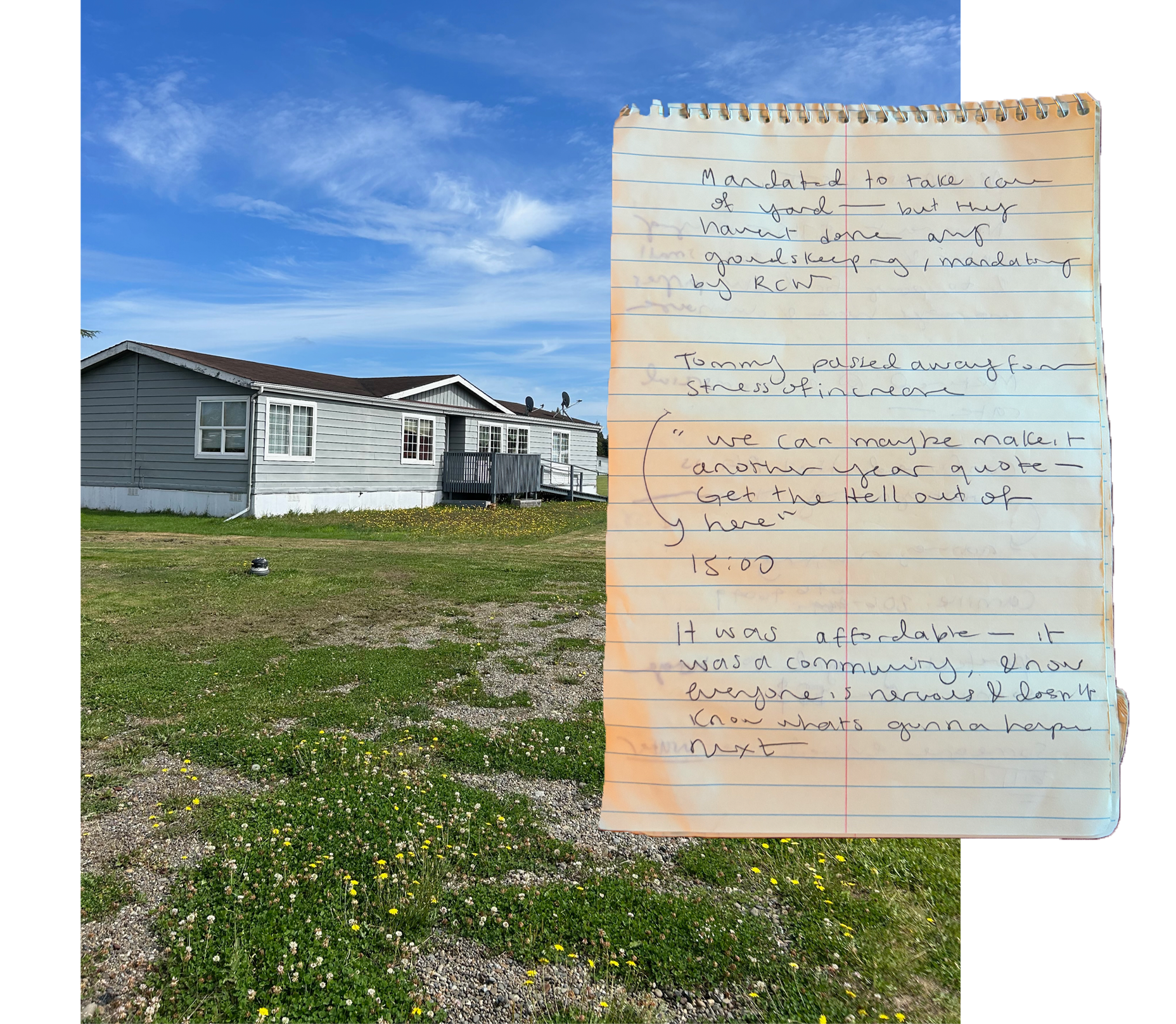
“You’re that investigative reporter everyone’s been talking about! You’re gonna help us!” one of them jested.
I recorded a round of testimonies to the landlord’s unfair practices, before Judy and Bill, two tenants who had lower mobility issues, pulled me along for a tour of the park’s premises. We weaved inside and between homes, as they pointed out management mishaps, their neighbors’ life stories and shared tragedies. I retraced my steps until the distance between Arizona and Washington drew smaller, and suddenly I realized home was here too.
I merged back onto Highway 105, my eyes glazing over the monotony of pines canopied over my car. I let my thoughts tumble over the remainder of the drive, trying to understand why these people I had just met were so assured I’d do their stories justice. I wanted to do everything in my power to honor them, even if it risked dancing on the edge of the knife.

In early 2024, a UW professor rang my phone, calling in a state of distress. She had just received a letter from a detainee at the Northwest Detention Center alleging that ICE had falsely accused him of committing statutory rape. The detainee, Kungfu, was from Chuuk, a state in Micronesia. He wrote a letter pleading his innocence to the professor, saying he’d already exhausted every action he could take to remedy this mistake.
The professor, unable to offer any legal counsel for Kungfu, turned to state records to dig for any discrepancies between his state criminal background check and his deportation forms. When she found no mention of the crime – she turned to me, hoping I could further prove Kungfu’s innocence through the investigative reporting process.
I remember being asked why I wanted to pursue this story. I couldn’t shake the gut feeling that Kungfu was truthful, that ICE was now subjecting him to mental torment. In his letter, he wrote that his former cellmate — also from Chuuk — started spreading rumors that Kungfu was a child rapist. A mob came for Kungfu’s family, an initial attack that served as a warning for what was awaiting Kungfu.
After multiple rebuffs from the NWDC, I turned to ICE’s notoriously difficult records request process. I spent months waiting and an appeal waiting — the Seattle sun now creeping through. A friend of mine called: he’d been doing weekly visits to the NWDC as part of a legal clinic, and decided to check on Kungfu to see if I could schedule a visitation with him.
ICE deported Kungfu despite his pleas. It happened without warning, my friend said.
My eyes welled up and then came a downpour of guilt, grief and anger. I trekked to Golden Gardens to process my feelings outside the confines of my studio apartment, but no amount of salt air could assuage my tears. I worried ICE deported him knowing I was on the case, and neither my friend or I were offered any reason as to why this could’ve happened so quickly.
a viewpoint from golden gardens park. april 2024.
Another month later, I was sitting at my desk when my phone buzzed with a call from a D.C. phone number. I rushed to answer, an attorney with ICE’s headquarters on the line. He finally had a response to my three-month-old appeal.
“That was a mistake. We’ll correct the record, but you should relay the information to the detainee himself,” he said, callously.
The last I heard of Kungfu was through his mother on Facebook Messenger. Her son had gone into hiding, and I sent her my article in hopes she could clear his name.

A year passes. The mobile home reporting gains traction, now with a documentary and policy reform to my name. Our newsroom’s management notices, and I’m being told they’re using my stories to attract grants and in meetings with donors. These grants were meant to keep our investigations team afloat, to keep this “hard-hitting work accessible to local audiences” — something I foolishly hoped they believed.
I was meeting people at their most overlooked, when the state failed them into a state of eviction, detention and exploitation. I did this work simply because I cared, because I thought I could implement a movement journalism framework through an outlet that had given me the resources — the chance to do so, even after I felt the knife’s graze.
But to them, these stories were just another metric. I was unknowingly trading my sources’ vulnerable experiences for a false sense of stability. I thought if I appeased those at the top, I could bargain for more chances to continue helping others in the way I knew best. It was a vicious cycle.
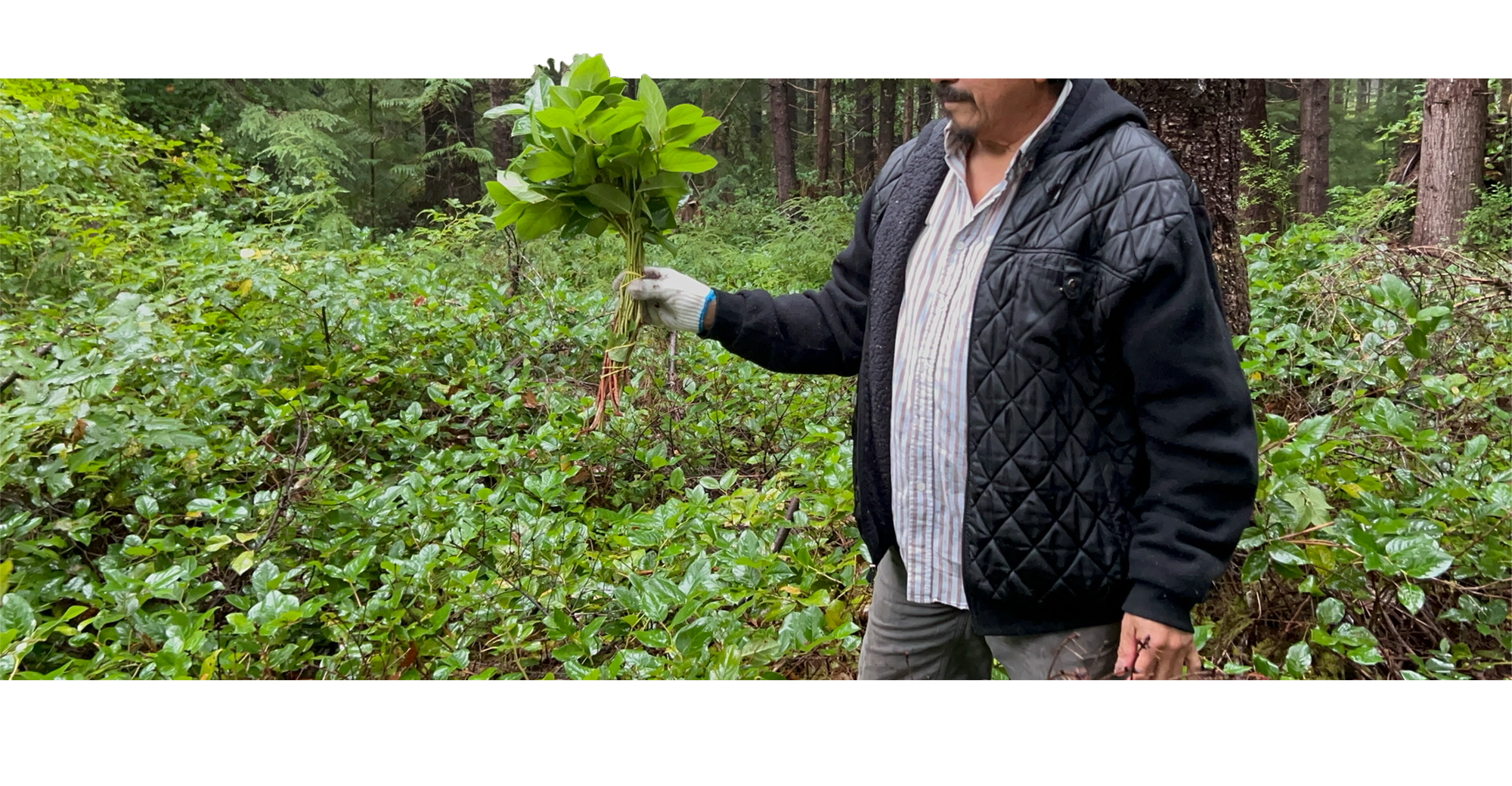
I wonder if my CEO ever had to sit with sources until late into the night, after an already exhausting four-hour drive, because he was the first journalist in years to come to their small town and lend an ear to their horrific labor conditions. I wonder if my CEO ever had to hunt down sources in different countries, guiding them on how to receive back pay through a string of broken Spanish. I wonder if my CEO ever witnessed an immigration court hearing, and saw how easy it was for people to be denied release, even with the best possible lawyers. I wonder if my CEO ever cared.

Then the knife finally came for me.
It’s late 2025 and the CEO tells us the PBS affiliate failed to raise enough money to counter a multi-million dollar deficit from the federal funding cuts to public media. They were shutting down their journalism operations in favor of saving their TV magazine programming — something we suspected they’d always planned to do. Investigations were suddenly too ambitious, and accountability went back to being a buzzword.
At 26, I’m tired of figuring out if there’s room for me in journalism. There should be, and there will be — but on my own terms. It is a bit daunting to pursue this work independently after I’ve been chasing the security of a newsroom for so long, but I think I’m finally ready to make that step.
In Foresight is months in the making, and I’ve never been more excited to share something with the world. This is my gift to my community, my way of showing up outside of any bureaucratic noise. I want this to become a living resource for marginalized people to turn to – especially as we face increased immigration enforcement, repression and state-sponsored genocide. Let’s build towards journalism that not only informs, but mobilizes and protects against any and all systems of oppression. Let this be an act of solidarity.
-- Farah
Member discussion